In modern soccer, the ability to regain possession quickly after losing the ball has become a defining characteristic of top teams. High pressing, or counterpressing, is a coordinated tactical approach aimed at winning the ball back in the opponent’s half, often within seconds of losing it. This strategy not only prevents the opposition from launching counterattacks but also positions the team closer to the opponent’s goal, increasing the likelihood of creating scoring opportunities. For teams looking to implement or refine such tactics, understanding the underlying principles and triggers is essential.
This article delves into the methodologies behind effective high pressing. It explores the key triggers that initiate a press, the coordinated movements required from each unit, and the training processes that help embed these patterns. By examining the tactical framework and the variables that influence its success, coaches and players can gain valuable insights into this proactive style of play. The focus is on the process and structure of pressing, not on guaranteeing outcomes, as success depends on numerous contextual factors.
Fundamentals of High Pressing
High pressing is a proactive defensive strategy where the team moves up the pitch to pressure the opponent when they have the ball, aiming to force errors and regain possession in advanced areas. This approach contrasts with a deeper defensive block, where the team retreats and protects its own goal. The decision to press high is influenced by several factors, including the team’s physical conditioning, the opponent’s playing style, and the match context. Effective high pressing requires a high level of collective coordination, as players must move as a unit to close down spaces and limit passing options.
A successful high press is built on organized structure and clear communication. The team typically adopts a formation that allows for compactness, such as a 4-3-3 or 4-2-3-1, which enables players to cover the central areas while also applying pressure on the flanks. The leading forward (or forwards) initiates the press by curving their run to force the opposition towards the sidelines, where space is restricted. Meanwhile, the midfield and defensive lines push up to maintain a tight gap between lines, preventing the opponent from playing through the middle. This coordinated effort requires excellent positional awareness and stamina, as the team must sustain high intensity for short bursts.
Understanding the spatial dynamics is crucial. Pressing high leaves space behind the defense, which can be exploited if the press is bypassed. Therefore, the team must have a well-defined plan for when the press is broken, often transitioning into a holding shape or a quick recovery run. Coaches often emphasize the principle of ‘trapping’ the opponent in wide areas, where the touchline acts as an additional defender. By forcing the play into less dangerous areas, the pressing team can increase the chances of winning the ball through tackles or interceptions.
Pressing Triggers: Determining When to Engage
Pressing triggers are specific cues or situations that signal the team to initiate a coordinated press. These triggers can be based on the opponent’s actions, the position of the ball, or the team’s own structure. Recognizing and reacting to these triggers is essential for the press to be effective. While some triggers are universal, their application varies based on the opposition’s tendencies and the game state. Common triggers include a poor first touch, a backward or square pass, or when the ball is received facing their own goal. Additionally, pressing is often triggered when the ball is played into wide areas, especially when the receiver is under pressure or when the ball is played back to the goalkeeper.
Another important trigger is the timing of the opponent’s pass. When the ball is in the air, or when a pass is slow to be controlled, the pressing team can use that moment to close down quickly. Furthermore, pressing may be triggered by the team’s own positional readiness; if the players are compact and well-organized, they may choose to press even when the opponent has possession in less dangerous areas. Coaches often design training sessions to help players recognize these triggers through repetition and video analysis. By internalizing these cues, players can react instinctively during matches.
The decision to press is also context-dependent. In certain situations, it may be more prudent to drop into a mid-block rather than press high, such as when the team is leading late in the game or when the opponent has a significant pace advantage in behind. Therefore, pressing triggers are not absolute rules but rather guides that players must interpret based on the evolving match situation. A successful pressing team does not press continuously but instead chooses the right moments to engage, preserving energy while maximizing chances of regaining possession.
Coordinated Team Movements: Executing the Press
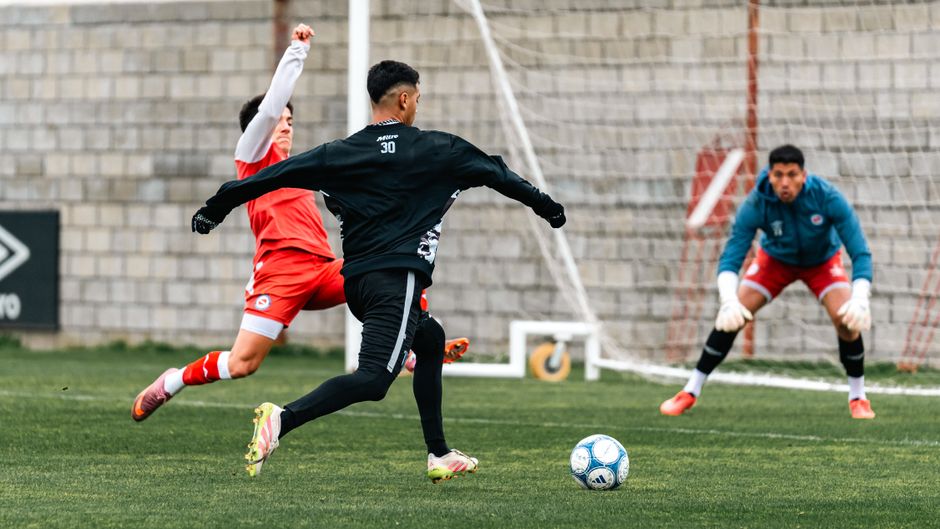
Executing a high press involves synchronized movements across all lines of the team. The forward line takes the initiative by pressing the ball carrier, while the midfielders and defenders adjust their positions to deny passing lanes and provide cover. The pressing forward typically angles their run to force the play in one direction, often towards the touchline. This ‘herding’ technique reduces the opponent’s options and makes the pressing more predictable for the rest of the team. As the ball moves, the entire team shifts collectively, maintaining the team’s shape and compactness.
The midfielders play a pivotal role in the press. They must decide whether to step up to press the receiver or stay in position to cover dangerous spaces. If a midfielder leaves their position to press, another player must fill the vacated space to prevent gaps from opening. This rotational movement requires excellent communication and understanding among teammates. For example, in a 4-3-3 formation, the deepest midfielder often stays as a screen in front of the defense, while the two more advanced midfielders may push up to press the opponent’s central players. On the flanks, the wide midfielders or wingers work alongside the full-backs to trap the ball against the sideline.
Defenders must also be active in the press. They push up to reduce the space behind them, effectively stepping into midfield positions to support the press. This high defensive line requires excellent coordination to maintain an offside trap, catching opponents offside when they try to run in behind. However, this tactic carries inherent risks; if the offside trap is mistimed, it can lead to one-on-one situations. Therefore, the defensive line must work in unison, moving up and down the pitch as the ball moves. The goalkeeper also becomes an integral part of the high press, often acting as a sweeper-keeper to cover the space behind the defense.
Training the High Press: Drills and Processes
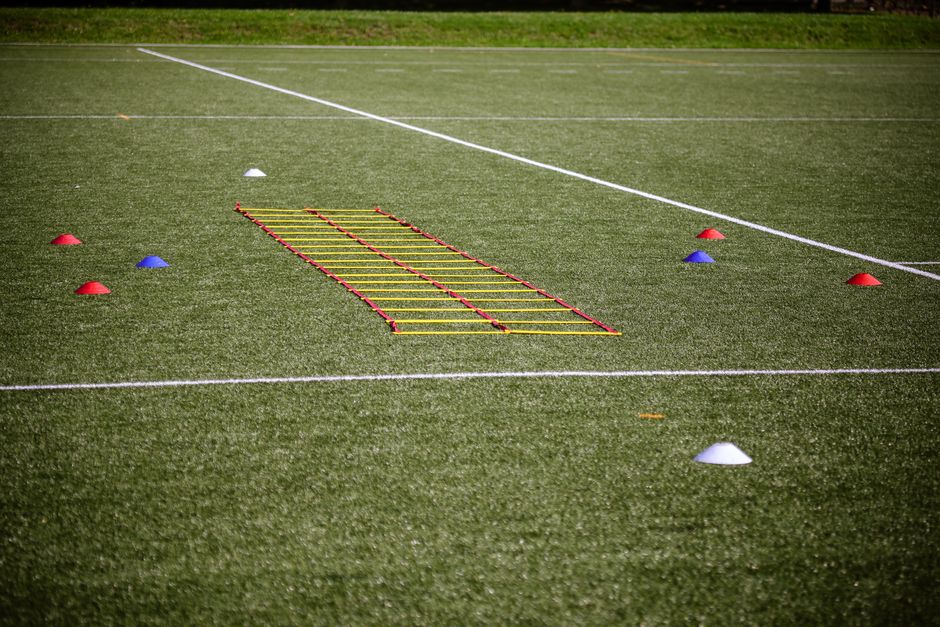
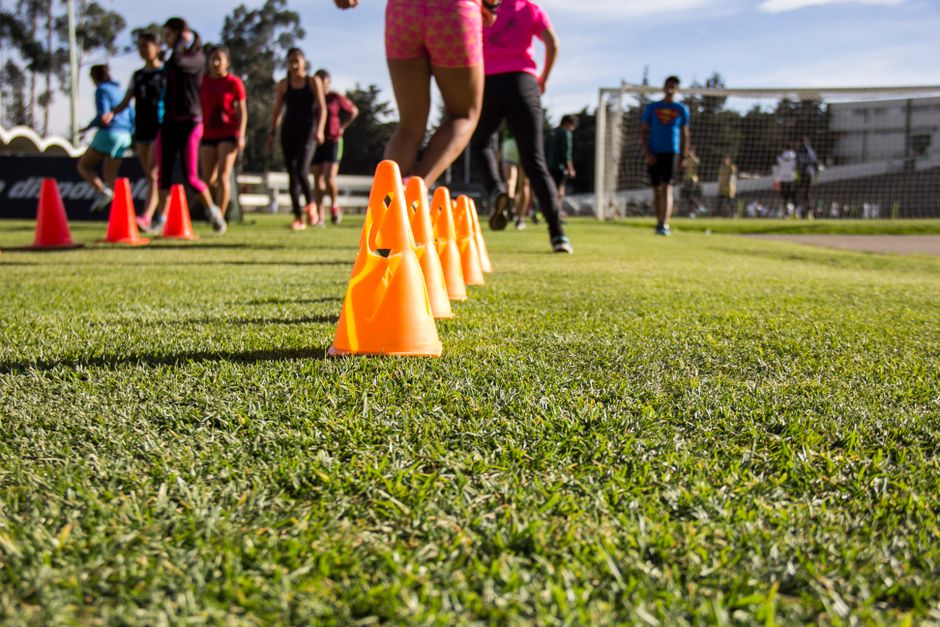
Training a high press involves developing the physical and tactical attributes required for this demanding style. Sessions typically focus on improving players’ stamina, speed, and agility, as well as their decision-making skills. Small-sided games, such as rondo drills, are excellent for encouraging quick thinking and pressing reactions. In these drills, the defending team practices pressing in a confined area, forcing the attackers to make quick decisions. Another effective drill is the ‘press and cover’ exercise, where three defenders press two attackers while a third attacker offers passing support, teaching players when to commit and when to hold.
Unit-specific training is also crucial. Forwards practice pressing triggers, closing down angles, and curving runs. Midfielders work on positional rotations and closing down passing lanes. Defenders rehearse stepping up and offside traps. Coaches use video sessions to analyze pressing situations, identifying successful interventions and areas for improvement. The key is to replicate match-like scenarios where players must react to visual cues and make split-second decisions.
Building the press into a team’s tactics requires patience and consistent reinforcement. Coaches often start with a low block and gradually implement the high press as the team gains confidence and fitness. It’s essential to integrate the press into the team’s overall game plan, ensuring that players understand when to press and when to conserve energy. Physical conditioning plays a significant role; the high press demands sustained intensity over short periods, so interval training is commonly used to simulate match demands. As with any tactical approach, the effectiveness of the high press depends on the players’ ability to execute the principles under the pressure of a live match.
Concluding Thoughts on High Pressing
High pressing is a sophisticated tactic that requires collective understanding, precise coordination, and physical readiness. By utilizing pressing triggers and synchronized movements, teams can increase their chances of regaining possession in dangerous areas. However, the success of this approach is not guaranteed; it depends on the opposition’s behavior, the match context, and the team’s ability to adapt. Coaches must consider the strengths and weaknesses of their players and the opponents when deciding to implement a high press. The principles outlined here provide a foundation for developing a pressing strategy that aligns with a team’s identity.
In practice, pressing is a reactive and dynamic process. Teams must remain flexible, switching between high and lower pressing based on the flow of the game. This tactical nuance emphasizes the importance of football intelligence and communication. Through dedicated training and careful analysis, any team can incorporate effective pressing phases into their play, contributing to a proactive and entertaining style of football.